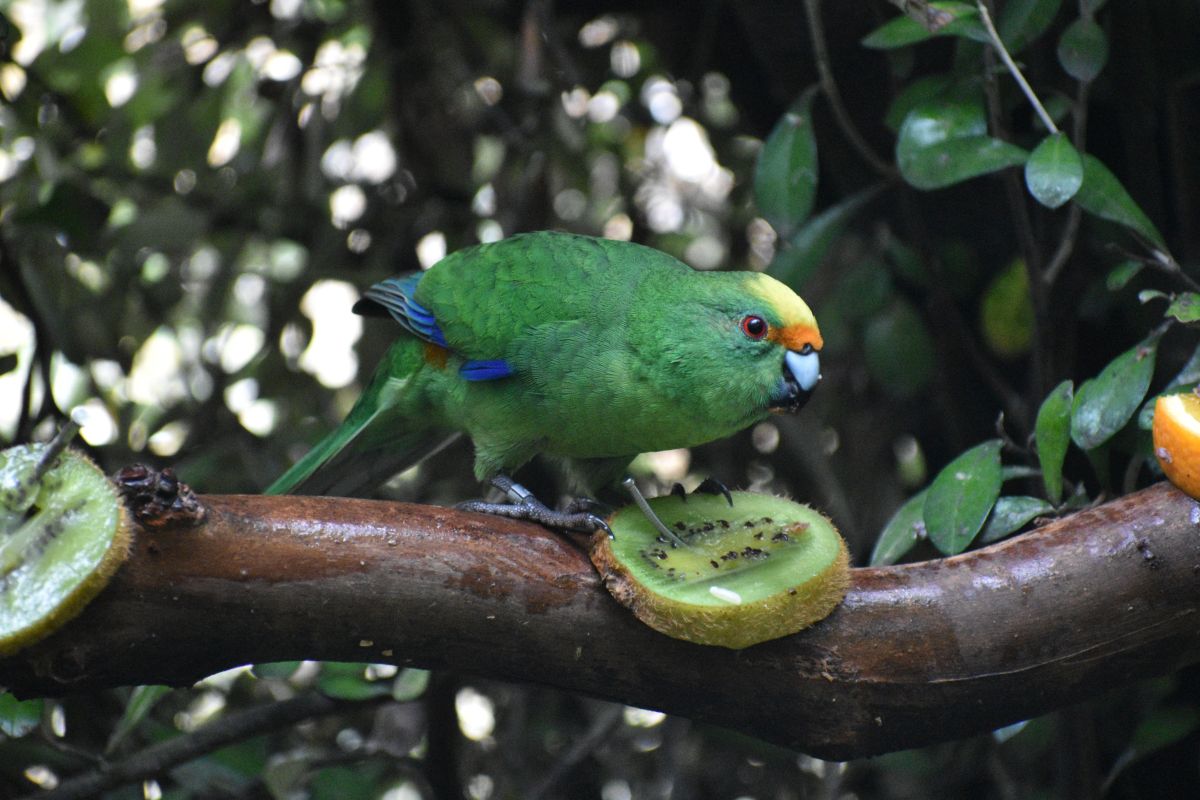
 Help us crown Kākāriki Karaka Bird of the Year for 2026!
Selwyn Libraries is campaigning this year in support of our little forest-dwelling neighbours, the kākāriki karaka. This precious parakeet needs all the help it can get to survive and thrive, so make sure you follow our campaign over the next few weeks to learn more about this manu (bird), and vote kākāriki karaka for Bird of the Year.
Help protect this tiny taonga, vote kākāriki karaka and show your love to the tree birds!
Image: Courtesy of Department of Conservation

How do I vote?
Voting for Bird of the Year is open from 4-20 September, on the Bird of the Year website. How voting works:
- Click on a bird to view its profile, campaign information, and a "Vote for me" button.
- Click "Vote for me" to add that bird to your vote. You can select up to five different birds (just make sure one of them is a kākāriki karaka 😉). This year, every vote cast for a bird also counts as a vote for that bird's party.
- Your selected birds will appear at the bottom of the screen. You can add, remove, or swap birds until you're happy with your final selection.
- Submit and verify your vote. To help prevent voter fraud, you'll then be asked to provide your name and email address. After submitting your vote, you'll receive a verification email containing a "Validate my vote" link. Click the link to confirm your vote - make sure you complete this final step, otherwise your vote won't count!
Why kākāriki karaka?
As a safe space for readers and introverts, we at Selwyn Libraries feel a special connection to this inquisitive, but shy parakeet. Having been declared extinct twice before their rediscovery in the late 1980s, the kākāriki karaka has a comeback story that rivals the best in our fiction section. With only 450 remaining in the wild (including a population in the Hawdon Valley, right here in Selwyn), these cute little guys need our support to ensure they’re not relegated to the rare birds collection forever.
Scroll down to find out more about this amazing little manu.
How do I follow the campaign?
Keep an eye on our Facebook Page and visit our Selwyn Libraries branches for upcoming campaign fun, including some special kākāriki karaka storytimes and colouring for tamariki, as well as lots of opportunities to learn more about this amazing manu and how you can help support its recovery.
What else can I do to support kākāriki karaka recovery?
Kākāriki karaka need all the help they can get to survive and thrive in our forests once again. There are several practical ways that you can support them and other native manu across Selwyn:
- Donate to the kākāriki karaka recovery programme and support the work of the organisations involved in captive breeding and release.
- Volunteer for a local trapping group and/or do your own backyard trapping. Find out more about how you can get involved in local predator control efforts.
- Plant native trees and shrubs in your garden and volunteer for community planting days. Find out more about the work of Te Ara Kākāriki, the aspirational project to create a ‘greenway’ – a corridor of native biodiversity Greendots between the Waimakiriri and Rakaia rivers, linking Kākāpōtahi the Canterbury Foothills to Te Waihora Lake Ellesmere and Te Pātaka o Rākaihautū Banks Peninsula: kakariki.org.nz
Bird of the Year Storytimes
We're bringing some Bird of the Year fun to tamariki across the district, with some special kākāriki karaka-themed storytimes! There'll be plenty of squawking and flapping, with songs and stories about our native manu, plus the opportunity to meet the star of the show, our very own kākāriki karaka! Bird of the Year Storytimes will be happening in our regular storytime sessions at the following locations and days:
Tuesday 8 September, 10-10.30am - Te Ara Ātea
Thursday 10 September, 10-10.30am - Lincoln Library & Service Centre
Friday 11 September, 10-10.30am - Darfield Library & Service Centre
Friday 18 September, 10-10.30am - Leeston Library & Service Centre
Did You Know? Fast Facts about Kākāriki Karaka
Critically Endangered
Did you know the kākāriki karaka is our most endangered tree bird? They have been declared extinct twice - in 1919 and again in 1965 – and are still on the brink. With only around 450 birds remaining in the wild, they’re officially classified as ‘Threatened–Nationally Critical’, the highest threat ranking under the New Zealand Threat Classification System.
 Power Couple
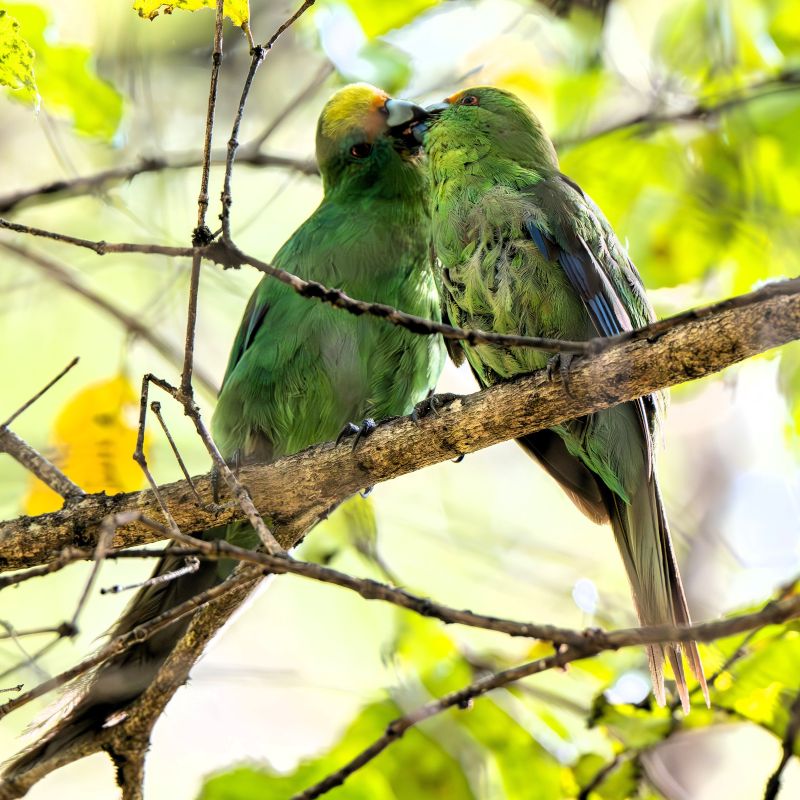
Did you know that kākāriki karaka mate for life? Trixie and Nacho have been together since 2023 at The Isaac Conservation and Wildlife Trust (ICWT) in Christchurch, and are pretty much a power couple (move over Tom Holland and Zendaya!). They clearly adore each other, as in just two breeding seasons, they've produced 55 chicks!
Kākāriki karaka choose their own mates, even in captivity, so although they both came from eggs gathered in the wild, Trixie and Nacho fell for each other at ICWT. This prolific pair have produced larger, and many more chicks than other captive pairs, earning them the title of 'Super Parents of the Bird World'.
Find out more about Trixie and Nacho's super parenting endeavours, which are helping keep their species alive, here.
Image: A pair of kākāriki karaka (not Trixie and Nacho!). Courtesy of Department of Conservation.
 Neighbours
Did you know that kākāriki karaka are residents of the Waikirikiri Selwyn district? Once found throughout the South Island, even urban Christchurch, there are now only two wil populations in Canterbury, with others established on predator-free islands in Fiordland and Marlborough.
Kākāriki karaka can be found in the alpine beech forests in the Hurunui south branch in Lake Sumner Forest Park, and the Hawdon Valley in Arthur's Pass National Park, here in Selwyn. If you're walking or tramping in these areas, keep an ear out for their chttering calls. If you're super lucky, you might just spot a flash of bright green in the trees!
Find out what kākāriki karaka sound like here.
Colours
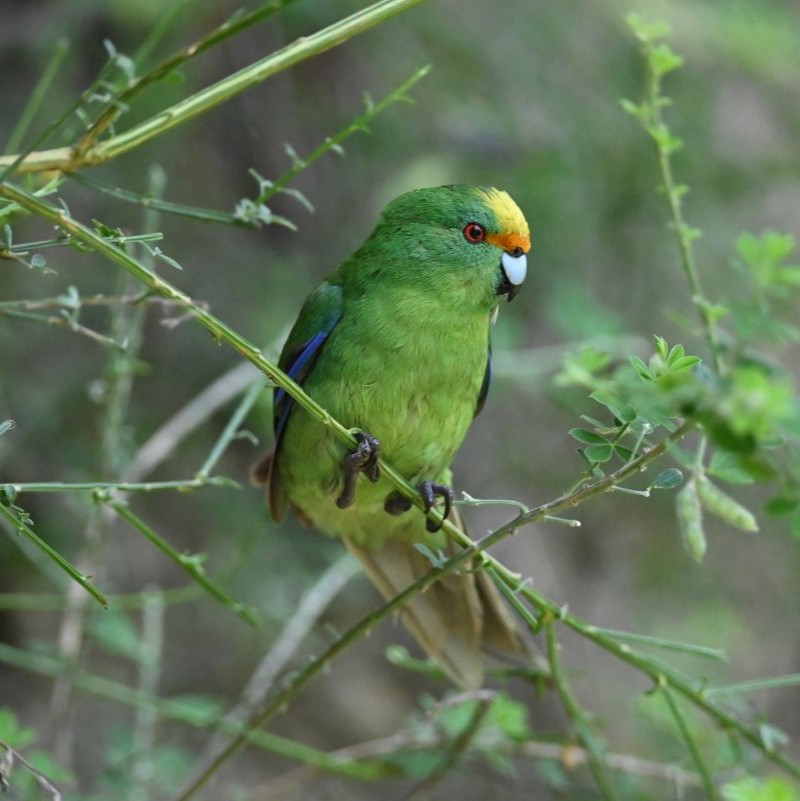
Did you know that the Māori word for the colour green - kākāriki - actually comes from the little green forest parakeets? Kākāriki karaka are brightly coloured jewels of the forest, with their emerald green-toned feathers, narrow band of orange about their beak and pale-yellow crown. They also have orange patches on either side of their rump as well as dark blue highlights on their outer wings.
 Babies
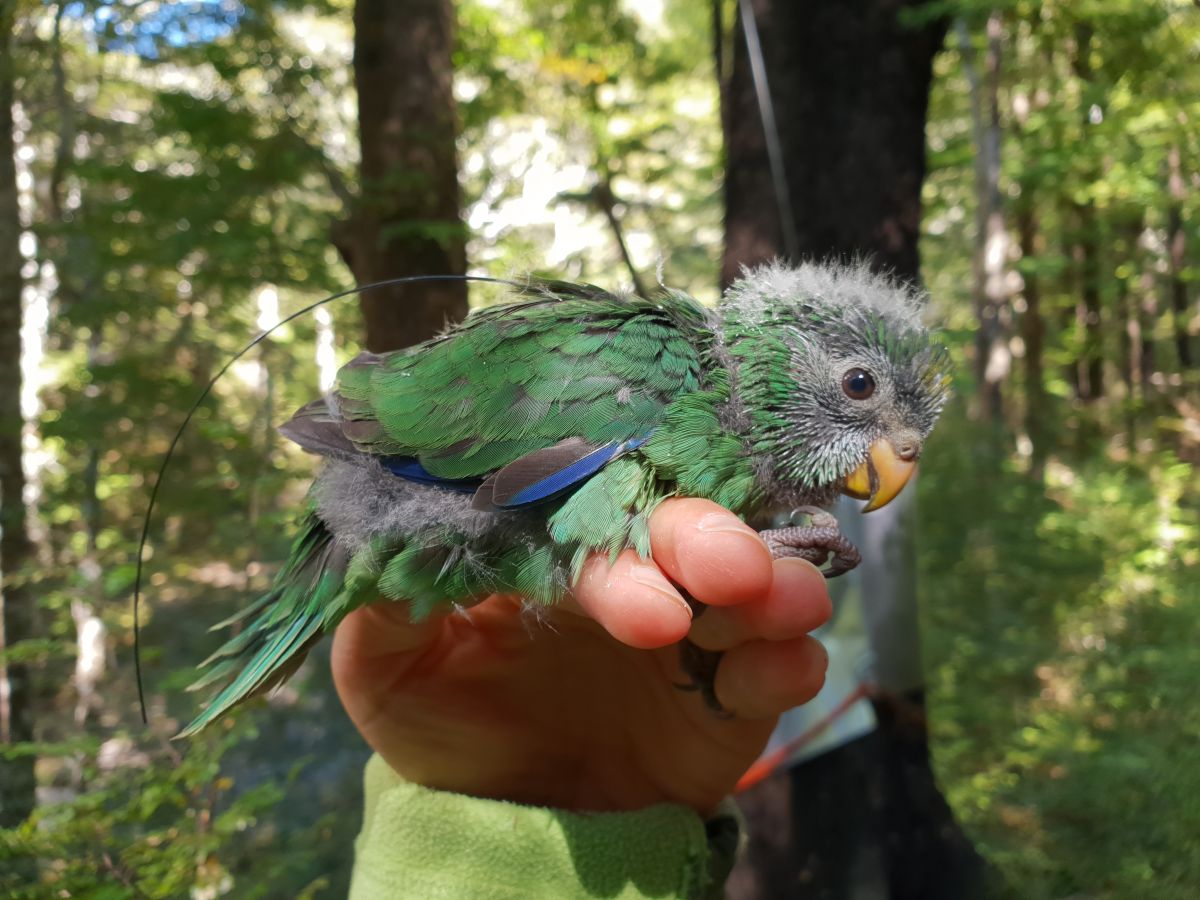
Did you know that kākāriki karaka are a boom-and-bust species? This means their breeding depends on the environment, specifically, the seeds of beech trees, which are their favourite food. However, beech trees do not produce abundant seeds every year. This causes problems for our little green friends as in a poor seed year they may barely breed. To help combat this, there are several captive breeding programmes led by DOC in partnership with Te Rūnanga o Ngāi Tahu. Isaac Conservation and Wildlife Trust and Orana Park, both located at McLeans Island in Christchurch, are doing amazing mahi, but programmes like these need your assistance.
Find out how you can support the kākāriki karaka conservation programme here.
Image: Kākāriki karaka chick with transmitter. Courtesy of Department of Conservation.
 Predators
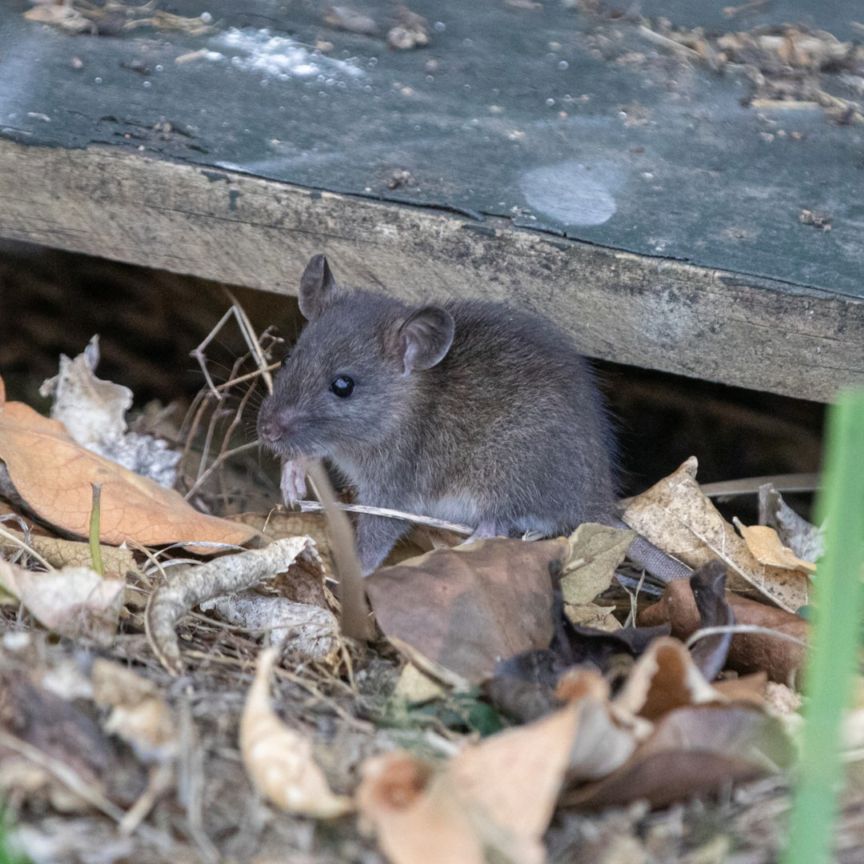
It's probably no surprise to know that kākāriki karaka are extremely vulnerable to introduced predators. Like many of our native manu, the arrival of small mammals has wreaked havoc on orange-fronted parakeet populations. Although they're strong fliers, kākāriki karaka like to forage on the forest floor, making them easy targets, especially to rat plagues during beech mast seasons. They also nest in tree cavities, putting eggs and chicks at risk from rats and stoats. According to Department of Conservation kākāriki karaka recovery programme lead Wayne Beggs, "Everything wants to eat them."
Predator control efforts are helping, but your support is vital. Conservation efforts have shown that in pest-free environments kākāriki karaka can thrive! Find out how you can contribute to a Predator Free Selwyn through backyard trapping, or volunteering for a local trapping group, here.
Image: Ship rat. Courtesy of iNaturalist.
Cousins
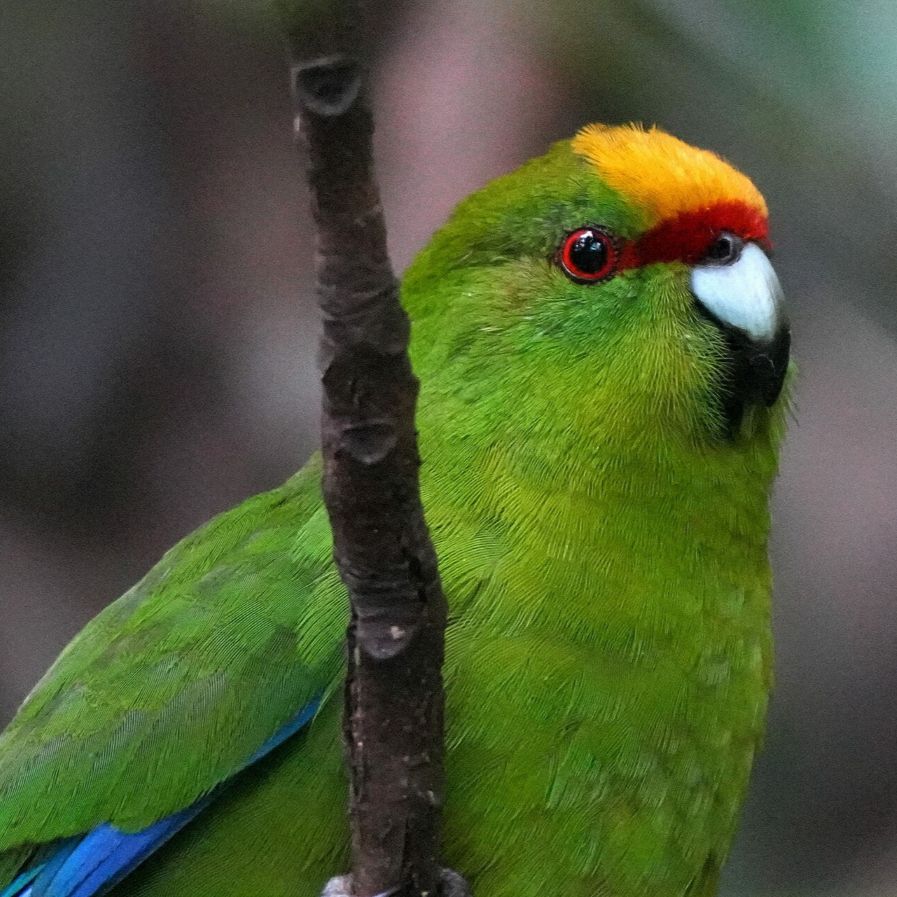
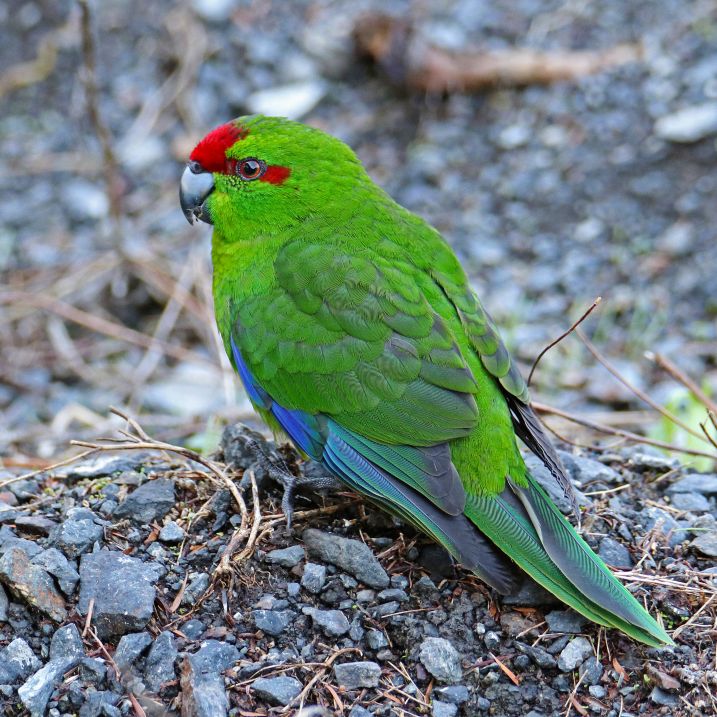
Did you know that kākāriki karaka have several cousins? While they have a complicated family tree, kākāriki karaka are closely related to four other kākāriki species, including the red-crowned parakeet and slightly more common yellow-crowned parakeet. In fact, kākāriki karaka were once believed to be a colour morph of the yellow-crowned kākāriki. Though different, they are still whānau.
Find out more about New Zealand's native kākāriki species, here.
Images: Yellow-crowned, red-crowned and orange-fronted parakeets.
|
|
|
|---|
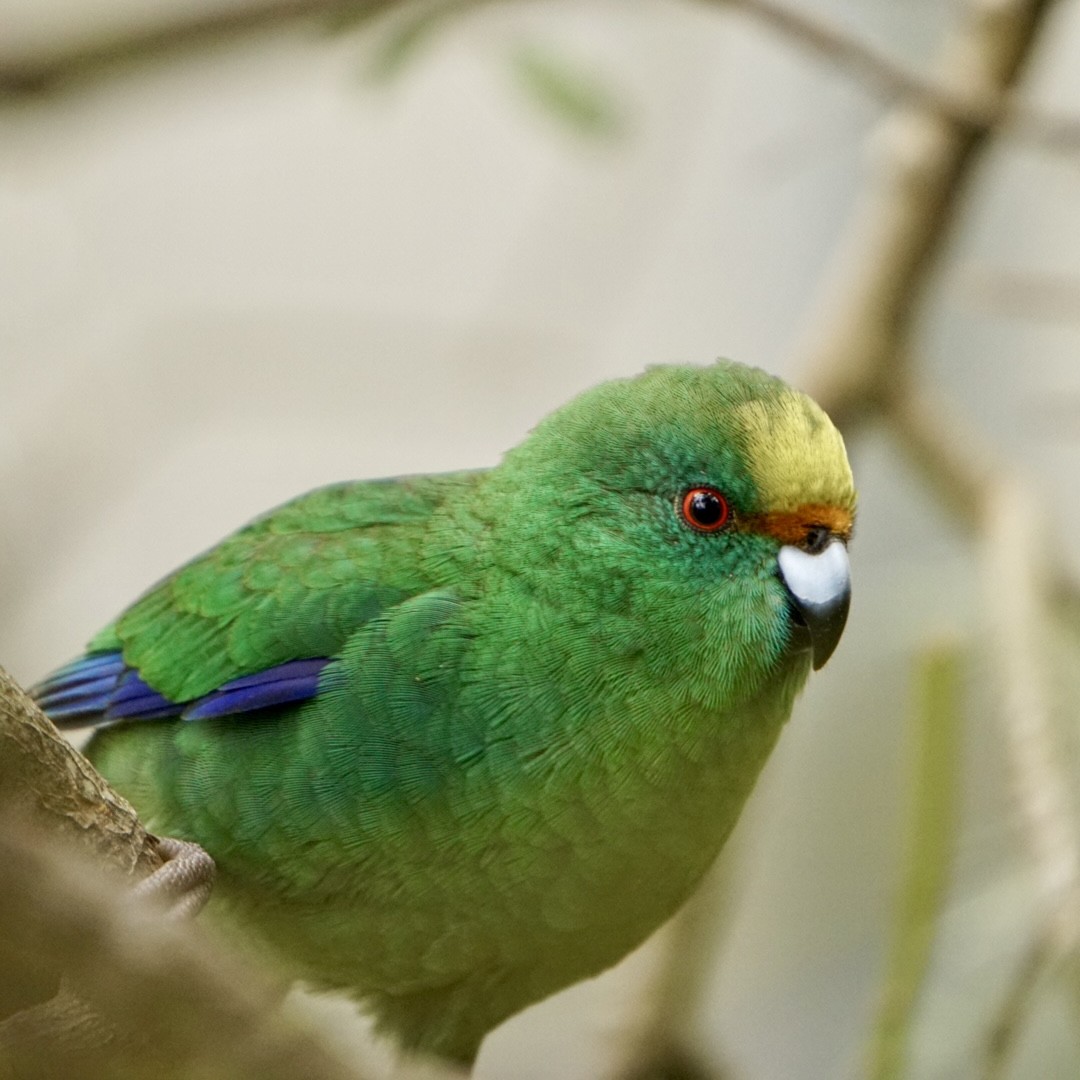
'Introverts'
Kākāriki karaka are coy little fellas. Compared to their noisier cousins, kākāriki karaka are known for being quite quiet and difficult to observe among the forest foliage, even being described as shy. Despite this, these manu are full of personality. They are naturally very curious and inquisitive little birds and highly social with each other.
They are usually found on their own or in pairs, however, in autumn and winter they can form small flocks. They may not be the most flamboyant or extroverted of the parakeet species, but that's all part of their charm.
What's in a name?
Did you know that kākāriki karaka are named for their colours? Kākāriki is both the te reo Māori kupu (word) for 'green' and 'little parrot', derived from kākā (parrot) and riki (little). Karaka means orange, after the coloured fruit of the karaka tree. The English name, 'orange-fronted parakeet' is just as literal!
 Tiny Taonga
Did you know that as part of the Ngāi Tahu Claims Settlement Act of 1998, kākāriki karaka are officialy recognised as a taonga species (a native bird, plant, or other animal of special cultural significance)? As such, Te Rūnanga o Ngāi Tahu actively participate in the managment of the species, partnering with the Department of Conservation and other organisations in conservation efforts.
Find out more about Te Ara Mōrehu, the 10-year kākāriki karaka recovery strategy, which is a partnership between Te Rūnanga o Ngāi Tahu and DOC, here.
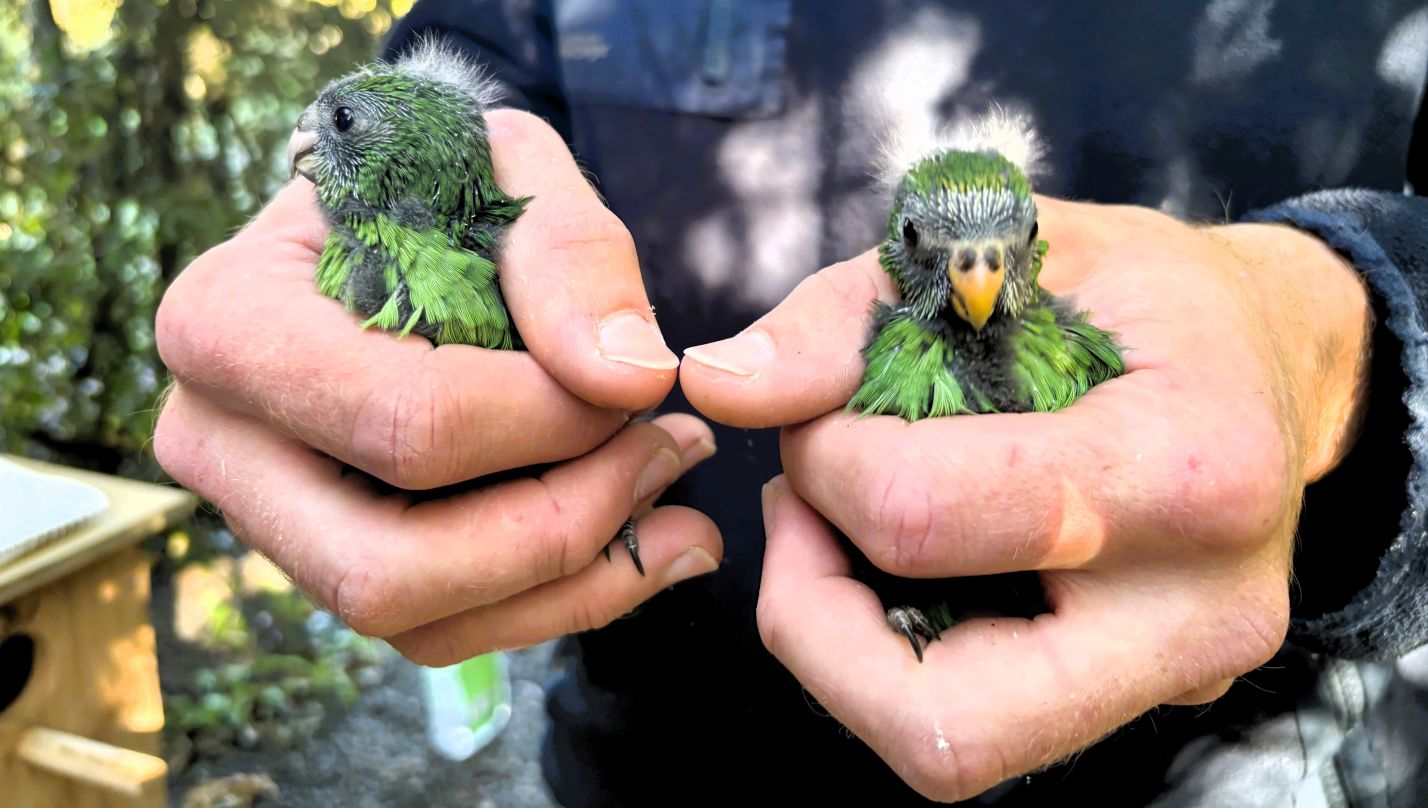
Image: pair of kākariki karaka chicks. Courtesy of Department of Conservation.